Home › Georgia › Georgia restaurant hood fire suppression licensing and tags
Georgia restaurant hood fire suppression licensing and tags
- Pick what you need and give your kitchen's ZIP code.
- Each service goes to the number of local companies you choose, from one to five. We check licenses where the law requires one and email you their names.
- You talk with them and decide. You hire and pay the company directly.
Facts checked 2026-11-15.
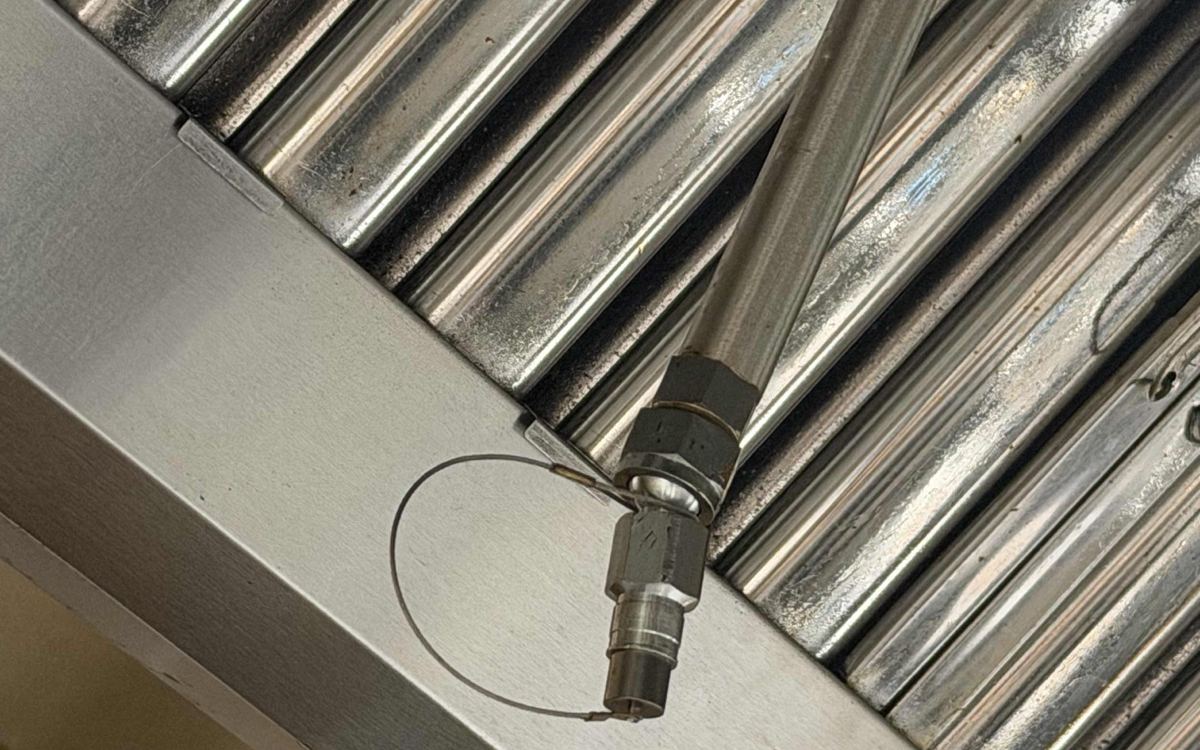
Georgia requires an automatic fire-extinguishing system over a restaurant hood, and only a licensed firm with a permitted technician may put one in or work on it. The Safety Fire Commissioner covers both halves: Rule 120-3-3 for the fire code and Rule 120-3-23 for licensing.
The fire code side
Rule 120-3-3 is how Georgia amends the model fire code. It says each required commercial kitchen exhaust hood and duct system gets an approved automatic fire-extinguishing system. It also adopts the 2024 edition of NFPA 17A, the wet chemical system standard, and the 2024 edition of NFPA 96, the standard for ventilation control and fire protection in commercial cooking.
The new editions took effect on May 27, 2025. Georgia had been on the 2013 edition of NFPA 17A and the 2017 edition of NFPA 96. A system installed under those older editions is a question for your local fire marshal, who can say how the office treats it now.
In 2025 the state also published notices proposing more changes to Rule 120-3-3. Check the rule on the Office of Insurance and Safety Fire Commissioner (OCI) site before you lean on any edition year.
Firms and technicians
Rule 120-3-23 sets the bar for the company and for the person doing the work.
A firm needs a license from the Safety Fire Commissioner to install, inspect, repair, recharge, service or test pre-engineered kitchen or restaurant suppression systems. To get one, it shows that it is a current Georgia corporation with liability insurance of at least $1,000,000, files samples of its tags and labels, and holds a qualifying certification.
A technician needs a kitchen technician permit and an employer that holds a firm license. The permit can rest on a manufacturer certification, a NICET Level II certification in special hazards, a NAFED kitchen system technician certificate or another certification the Commissioner accepts.
Some licenses carry limits. A firm licensed on a manufacturer's certification may only work on the systems that certification names. If your hood has one brand of system, ask whether the company's license covers that brand.
The rule says a required suppression system is installed, inspected, repaired, recharged, serviced and tested only by a licensed firm and permitted technician. Design and installation fall under the same requirement in the NFPA 17A changes.
A local company can take it from here. One form, free for restaurants.
Get connectedWhat the blue tag shows
Each service leaves a tag on the system. Georgia's suppression tag is light blue, 3 by 5.5 inches, and it lists:
- the firm's name, address, phone and license number
- the technician's name and permit number
- the system serial number
- the service done, the system type, and the month and year
- the words "DO NOT REMOVE"
A tag goes on at installation and again after each service. With several cylinders, the rule applies to every cylinder, control head, hand pull and control panel. A panel on battery power shows the battery's replacement date on both the tag and the battery. Only the latest tag stays.
A stored-pressure cylinder that has been maintained, tested or recharged also gets a Verification of Service collar under the NFPA 17A changes.
A system that is down
No cooking equipment may run while the system protecting the hood, duct or appliances is off or impaired.
If a firm finds a system short of its design capacity, or expanded without following the maker's installation rules, it attaches a non-compliance tag and sends a copy of its report to the authority having jurisdiction, usually the local fire marshal. After a non-compliance tag, the NFPA 96 changes have the owner or the owner's representative notify the fire authority in writing within 24 hours.
Keeping records
Owners keep maintenance reports for three years after the next maintenance of that type that the standard calls for. The firm separately holds its inspection, test and maintenance records at its own address for at least two years. Store your set in the kitchen office, where an inspector can get to it.
Class K placement
Georgia's fire code changes put the Class K extinguisher, and the sign for its operating sequence, 5 to 10 feet from the manual release of the hood suppression system. Leave wall space for both when you lay out the cooking line.
Where plans are sent
OCI reviews safety fire plans through its online portal for certain buildings, such as hotels, schools and structures of four or more stories. Whether a restaurant's plans go to the state, the local fire marshal or both depends on the building. The fire marshal or permit office for your address can say which. Gwinnett County's permit office lists fire suppression systems among its permits, and the City of Atlanta schedules fire protection as one of its inspection types.
Verifying a company
OCI runs a public licensed professionals search. Look the firm up, ask for the technician's permit number, and compare both numbers against a tag from an earlier service.
The license and the work belong to the company, and you hire and pay it directly. Describe your Georgia kitchen's suppression job on the form, and it reaches one licensed local company.
Questions
Is fire suppression required over a Georgia restaurant hood?
Yes. Rule 120-3-3 calls for an approved automatic fire-extinguishing system on each required commercial kitchen exhaust hood and duct system.
What does the suppression system tag look like in Georgia?
It is light blue and 3 by 5.5 inches, with the firm's license number and the technician's permit number, and it stays on until the next service replaces it.
Who may service a restaurant suppression system in Georgia?
A firm licensed under Rule 120-3-23 with a technician who holds a kitchen technician permit. Certain licenses cover only specific manufacturers' systems.
How many years do suppression records have to be kept?
The owner holds maintenance reports for three years after the next maintenance of that type that NFPA 17A requires.
May a kitchen cook while the suppression system is impaired?
No. The state's NFPA 17A changes bar operating cooking equipment while the protecting system is not operating or is impaired.
Sources
- Georgia Rule 120-3-3, State Minimum Fire Safety Standards (OCI PDF)
- Georgia Rule 120-3-3-.04, adopted standards and history
- Georgia Rule 120-3-23-.06, firm licenses for kitchen systems
- Georgia Rule 120-3-23-.07, technician permits for kitchen systems
- Georgia Rule 120-3-23-.13, service and records
- Georgia Rule 120-3-23-.14, tags
- OCI licensed professionals search
- OCI safety fire plan review
- OCI proposed rule notice, Nov 6, 2025
- Gwinnett County building services
- City of Atlanta inspections