Home › Georgia › Georgia grease trap hauler rules and manifests
Georgia grease trap hauler rules and manifests
- Pick what you need and give your kitchen's ZIP code.
- Each service goes to the number of local companies you choose, from one to five. We check licenses where the law requires one and email you their names.
- You talk with them and decide. You hire and pay the company directly.
Facts checked 2026-11-15.
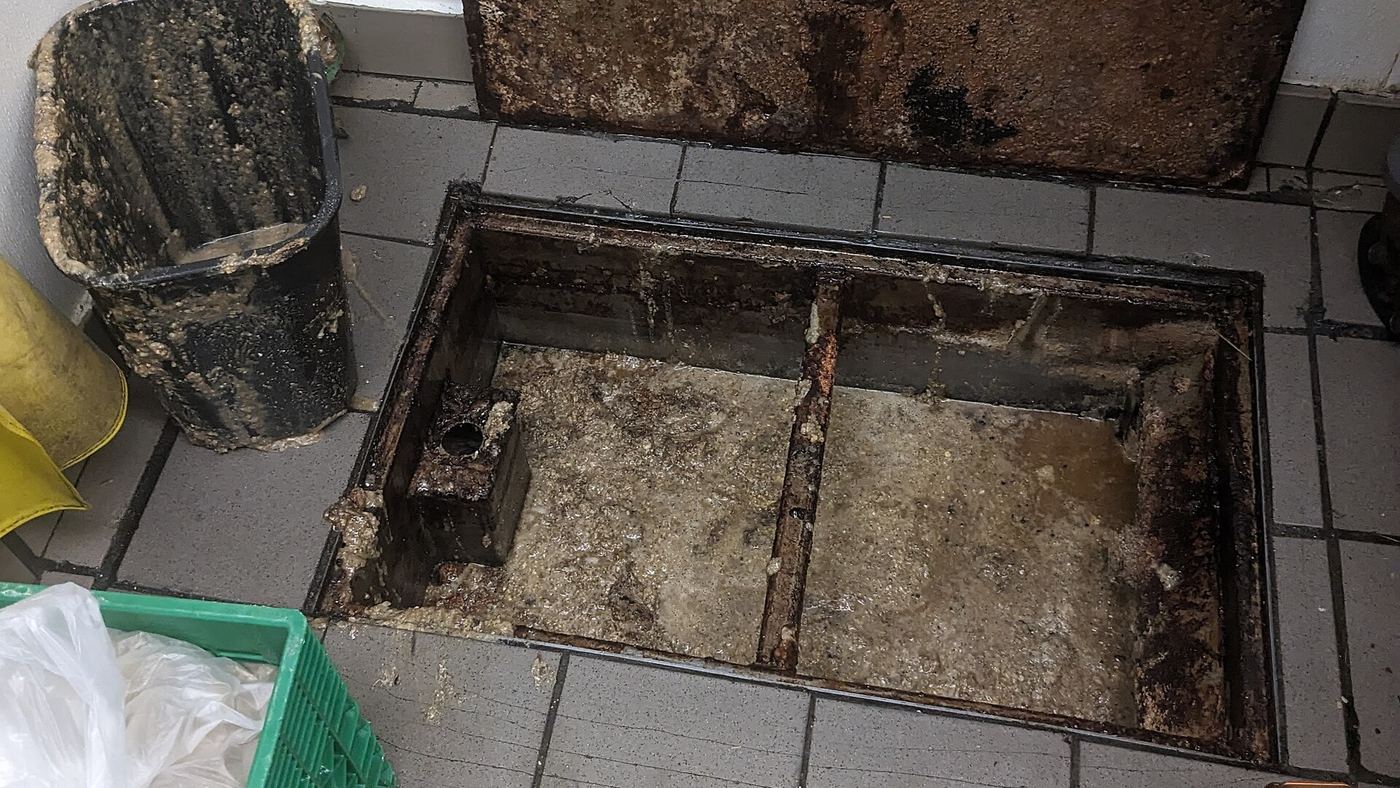

Three layers govern a restaurant grease trap in Georgia. The health rules say where the trap sits and that staff can reach it. The Environmental Protection Division (EPD) regulates the trucks that pump it out. Your city or county sewer utility runs the local program, which sets the permit, the trap size and the inspections.
Placement
DPH Rule 511-6-1-.06 covers drainage in a food service kitchen. A grease trap, where one is used, must sit where it is easy to reach for cleaning. Plan the kitchen so a hauler's hose can get to it.
The state rule on haulers
EPD Rule 391-3-6-.24 deals with moving commercial waste. It treats what is inside a food business's grease interceptor as commercial waste and calls the interceptor's owner or operator the originator. In a restaurant, that is you.
The rule asks the hauler for the following:
- State registration. A transporter with a tank truck for commercial waste registers with EPD, and the registration number begins with "FOG".
- One local permit per truck. The local government inspects the truck for leaks, durability, cleanability and repair, then issues a permit good statewide. It has 30 days to approve or deny.
- A complete pump-out. The whole interceptor is emptied.
- An approved disposal site. The waste goes to an authorized facility, such as one with a wastewater discharge permit or a permitted solid waste facility, and never gets mixed with hazardous or septic waste.
- A manifest. One is filled out per location serviced, with sections for the originator, the transporter and the disposal site. Within 30 days the hauler sends the originator a copy signed by the disposal operator, and the truck carries the last 30 days of manifests.
A local company can take it from here. One form, free for restaurants.
Get connectedWhat you owe as the originator
Only a transporter with a valid permit may remove your waste. You keep your manifest copies for three years and make them available when asked.
Before paying, request the hauler's EPD registration number and the truck's local permit number. The hauler registration form, per EPD's FOG page, is posted through the Southeastern FOG Alliance.
City and county programs
The utility sets most of what a kitchen deals with week to week.
In Atlanta, the Department of Watershed Management runs the Grease Management Program. Facilities apply, pay a permit fee based on how many traps they have, and agree to inspections. Section 154-297.01 of the Grease Management Ordinance covers trap type and sizing.
Ahead of a plumbing permit, the city wants site plans, plus floor plans showing kitchen equipment and its connection to the sanitary line. It also wants trap specifications listing the company, model number and a cross-section. A trap already in place needs as-built drawings and field verification. The program office takes calls at 404-546-1503.
Gwinnett County has had a FOG prevention program since 2000, with county inspectors visiting businesses. Its ordinance reaches restaurants as well as day cares, assisted living, schools, hotels, hospitals and any other site running a commercial kitchen. Call the Grease Management Program at 678-376-6713.
How often a trap gets pumped is a local call. Your utility's FOG program can say what schedule and paperwork it expects.
Gwinnett's kitchen habits
The county's best practices work in any kitchen:
- Screens go on the drains.
- Pots, pans and plates get a dry wipe before washing.
- FOG procedures are posted above sinks.
- Floor drains and mop sinks drain through the trap.
- Used fryer oil goes into a recycling container, never down a drain.
Picking a hauler
Choose a company with an EPD registration and permitted trucks. Get both numbers, write them down and file them with your manifests. Every location serviced needs a manifest, so expect a new one at each visit.
A pump-out request sent through the form goes to one EPD-registered local hauler in Georgia.
Questions
Which agency oversees grease haulers in Georgia?
EPD does, under Rule 391-3-6-.24. Haulers register with the state, and local governments inspect and permit each truck.
What does a grease trap manifest record?
It has sections for the restaurant, the hauler and the disposal site. The restaurant holds its copy for three years.
What is the required pumping frequency for a Georgia grease trap?
The state rule gives no number. Your local sewer utility's grease program can say what it expects at your address.
Does Georgia require a grease trap to be accessible?
Yes. Rule 511-6-1-.06 puts a grease trap, if used, where it is easy to reach for cleaning.
Is it allowed to pour used fryer oil down a drain?
No. Gwinnett County tells restaurants to keep used oil in a recycling container and never put it in a drain.