Home › Georgia › Georgia restaurant hood cleaning
Georgia restaurant hood cleaning: NFPA 96 and fire marshal
- Pick what you need and give your kitchen's ZIP code.
- Each service goes to the number of local companies you choose, from one to five. We check licenses where the law requires one and email you their names.
- You talk with them and decide. You hire and pay the company directly.
Facts checked 2026-11-15.
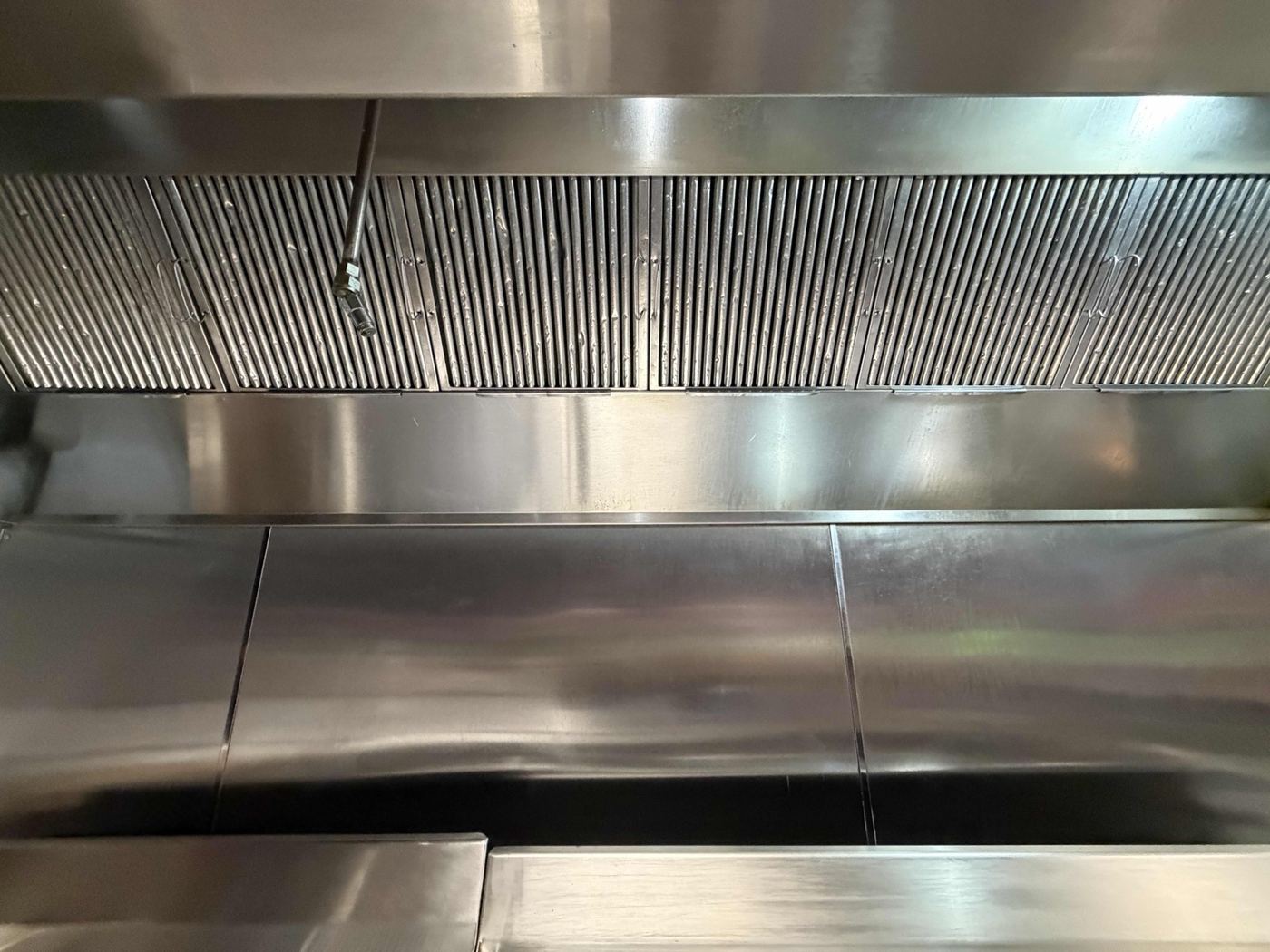
Georgia has adopted a national standard for commercial kitchen ventilation, and its health rules call for hoods and ducts that stay clean. What counts as acceptable cleaning is decided by the local fire marshal.
The fire rule and NFPA 96
Rule 120-3-3 adopts the 2024 edition of NFPA 96, the national standard for ventilation control and fire protection of commercial cooking. It took effect on May 27, 2025 and replaced the 2017 edition. The Safety Fire Commissioner has proposed further changes, so look up the current version.
A Georgia change says NFPA 96 covers every piece of commercial cooking equipment used in commercial cooking operations.
Section 607.3 of Georgia's International Fire Code says cooking appliances and each part of the ventilation system are installed, operated and maintained to NFPA 96. Section 607.2 puts the commercial hood at or above every appliance that gives off grease-laden vapors.
NFPA 96 holds the inspection and cleaning schedule, which this site does not reproduce. Your fire marshal or insurer can tell you which schedule your kitchen follows.
The health rules ask for clean ducts and filters that come out
The Department of Public Health looks at the same equipment through sanitation.
- Rule 511-6-1-.05 says the hood system, including hoods, fans, guards and ducting, must keep grease or condensation from dripping on food, equipment or utensils. Filters and grease-extracting equipment must come out easily for cleaning, and hoods must have enough number and capacity that grease or condensation does not build up on walls and ceilings.
- Rule 511-6-1-.07 has intake and exhaust ducts cleaned and filters changed so they do not contaminate anything. Exhaust that vents outdoors may not create a public health hazard or a nuisance.
Health rules focus on grease reaching food and surfaces. Fire rules treat the cooking system as a whole.
A local company can take it from here. One form, free for restaurants.
Get connectedThe authority that decides
Both NFPA 96 and the fire code name an authority having jurisdiction, meaning the local fire marshal's office. That office judges whether the cleaning and the paperwork are acceptable.
Georgia's licensing rule for fire companies, Rule 120-3-23, covers portable extinguishers and kitchen suppression systems. Duct cleaning is not on its list, and no other state license for it turned up. The fire marshal decides which training or proof of skill to accept. Phone the office before hiring and ask what it accepts, and what it wants afterward, such as a report or a dated sticker on the hood.
Where cleaning meets suppression
Whoever cleans a hood tends to see the suppression system up close. State rules bar cooking while the system over the hood, duct or appliances is off or impaired. When a system is tagged non-compliant, the owner or the owner's representative informs the authority in writing within 24 hours.
Servicing or repairing the suppression system itself is work for a firm licensed under Rule 120-3-23. While a cleaner is on site, read the blue tag on the system and note its date.
Questions for a cleaner
Hood cleaners are mostly independent businesses, so the checking is up to you:
- Does the company meet what your fire marshal requires?
- Will it clean the entire path from hood and filters through the duct to the fan?
- Can it reach every section of duct, and if not, where would new access panels go?
- What does it leave behind, such as a report, photos or a dated sticker?
- Does it carry insurance, and can it send a certificate?
File each report in the kitchen office so you can hand it over to the fire marshal or your insurer.
Describe the job on the form with a Georgia ZIP, and the request goes to one local hood cleaning company.
Questions
What is the cleaning schedule for a Georgia restaurant hood?
NFPA 96 sets it, and Georgia adopts that standard. The local fire marshal can tell you which schedule your kitchen is on.
Does the state of Georgia license hood cleaners?
Rule 120-3-23 covers extinguishers and kitchen suppression systems but does not list duct cleaning, and no other state license for it was found. Ask the fire marshal what training it accepts.
What do health inspectors check on a Georgia kitchen hood?
Under Rule 511-6-1-.05, hoods must stop grease or condensation from dripping on food, equipment or utensils, and filters must be easy to remove for cleaning.
Who enforces hood rules in Georgia?
The local fire marshal enforces the fire code and NFPA 96 as the authority having jurisdiction, and the county health office enforces the food service rules.
Sources
- Georgia Rule 120-3-3, State Minimum Fire Safety Standards (OCI PDF)
- Georgia Rule 120-3-3-.04, adopted standards and history
- Georgia Rule 511-6-1-.05, physical facilities and exhaust hoods
- Georgia Rule 511-6-1-.07, ventilation and duct cleaning
- Georgia Rule 120-3-23-.06, kitchen suppression firms
- Georgia Rule 120-3-23-.13, service and records