Home › Florida › Class K and kitchen fire extinguisher rules, Florida
Class K and kitchen fire extinguisher rules, Florida
- Pick what you need and give your kitchen's ZIP code.
- Each service goes to the number of local companies you choose, from one to five. We check licenses where the law requires one and email you their names.
- You talk with them and decide. You hire and pay the company directly.
Facts checked 2026-11-15.
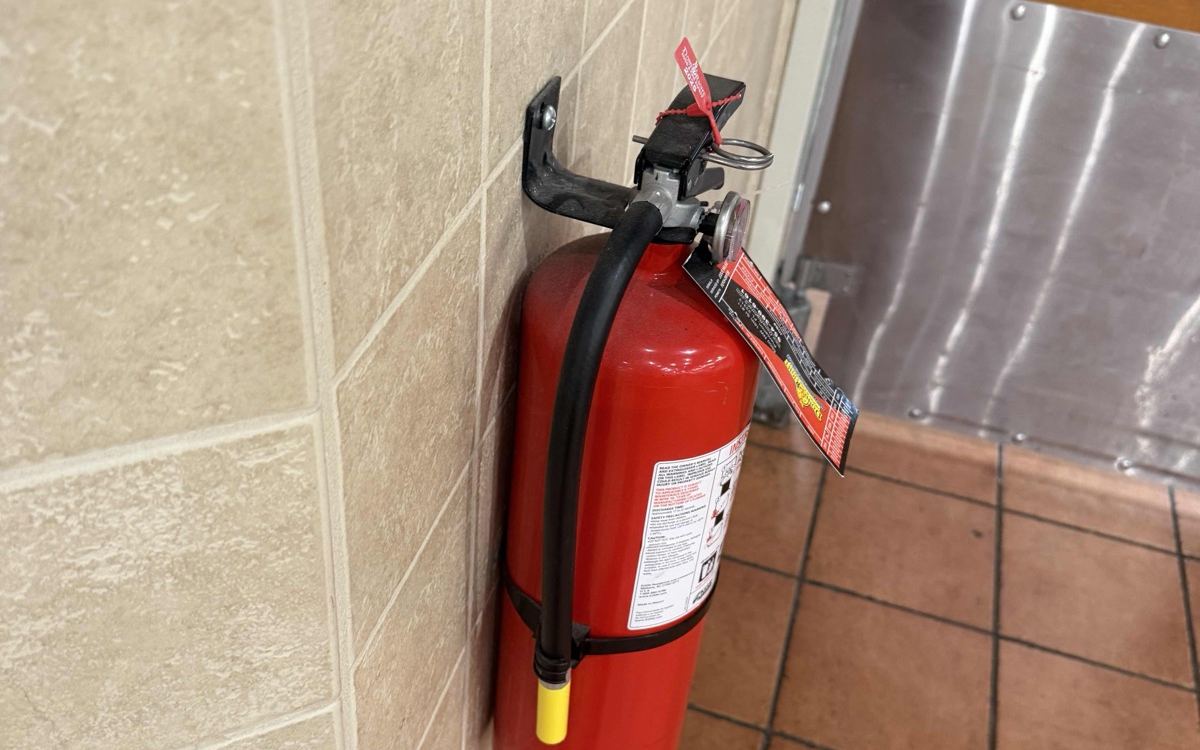
A Florida commercial kitchen keeps a Class K extinguisher by the cooking line for grease fires, along with the ordinary extinguishers the rest of the building needs. Staff look them over monthly, and a company licensed by the State Fire Marshal services and tags each one yearly. Commercial Kitchen 101 passes requests to local companies and does none of the work itself.
What a kitchen needs on the wall
Class K units are built for cooking oil and grease fires. The DBPR plan packet calls for Class K extinguishers together with automatic hood suppression wherever grease-laden vapors or smoke are produced.
Under the Florida Building Code, portable extinguishers sit within 30 feet of commercial cooking equipment. The type has to be approved for cooking grease fires and compatible with the agent in the hood suppression system.
Florida's Fire Prevention Code adopts NFPA 10 (2018). The fire marshal's office can say how many extinguishers, of which types, the remainder of the building requires.
Even a Class K unit does not stand in for the hood system. The fire suppression guide covers that side.
The 30-day look
NFPA 10 puts a check on the building owner about every 30 days. A Minnesota Department of Health guide built on the 2010 edition of NFPA 10 says trained staff may do it, and that it is a visual check. The fire equipment company or the fire marshal can describe what to look for and what record to keep.
A local company can take it from here. One form, free for restaurants.
Get connectedThe yearly visit
Rule 69A-21 ties maintenance to NFPA 10 and the maker's manual, at least once a year. When the work is done, the dealer:
- Replaces the tamper seal, which the rule requires every year.
- Attaches a tag carrying the servicer's name and permit number.
- Hands over an invoice listing the business name, address and license number, plus the serial number and the service performed on each extinguisher.
Walk the wall with the invoice. A serial number that does not match is a question for the company.
Longer intervals
Some units need heavier work on top of the yearly visit. The Minnesota guide, again drawing on NFPA 10 (2010), gives these:
| Work | Interval | Applies to |
|---|---|---|
| Emptying and examining inside | Every 6 years | Stored-pressure dry chemical extinguishers |
| Internal examination | Every 5 years | CO2 and wet chemical (Class K) extinguishers |
| Hydrostatic test | Every 5 years | Water, CO2, wet chemical and stainless steel dry chemical |
| Hydrostatic test | Every 12 years | Other dry chemical extinguishers |
| Removal from service | 12 years after manufacture | Non-rechargeable extinguishers |
Florida has adopted a later NFPA 10 edition than that guide used, so the licensed company should confirm the intervals. Rule 69A-21 also requires a six-year maintenance record decal on certain stored-pressure units, and the dealer puts it on after the work.
Who may do the work
A business that services, recharges, tests, inspects, installs or hydrotests extinguishers needs a State Fire Marshal license under Florida law. The license is issued per location, and every technician needs a permit as well.
| License | What it covers |
|---|---|
| Class A | All extinguisher work, including hydrostatic testing of all types |
| Class B | The same, but hydrostatic testing leaves out CO2 |
| Class C | Leaves out CO2 recharge and CO2 hydrostatic testing |
| Class D | Pre-engineered systems, which include restaurant hood systems |
Ask a company for its license number and for the technician's permit number. Doing or advertising contracting work without the proper license is a crime in Florida, and the fire suppression guide shows how a license can be checked.
Fire chiefs, fire inspectors, fire marshals and insurance inspectors may inspect extinguishers without this license. It applies to the people who service them.
Once you send the form with a Florida ZIP code and the extinguisher service you need, it goes to one licensed local fire equipment company.
Questions
Is a Class K extinguisher required in a Florida restaurant?
DBPR requires Class K extinguishers where grease-laden vapors or smoke are produced. The Florida Building Code adds that extinguishers belong within 30 feet of cooking equipment.
How often does a restaurant extinguisher need service?
At least once a year, and the tag must show the servicer's name and permit number. Certain types also need 5-year, 6-year or 12-year work on top of that.
May restaurant employees service the extinguishers?
Employees can handle the monthly check. Servicing, recharging and hydrostatic testing belong to a business licensed by the State Fire Marshal, using a permitted technician.
What belongs on an extinguisher service invoice?
The invoice names the business, its address and its license number. For each extinguisher it lists the serial number and the service that was done.
Sources
- Florida Statutes 633.304, fire equipment licenses
- Chapter 69A-21, Florida Administrative Code (State Fire Marshal PDF)
- Rule 69A-3.012, adopted NFPA editions
- DBPR plan review packet (HR-7030)
- Florida Building Code, Building, chapter 9 (UpCodes copy)
- Minnesota Department of Health, portable fire extinguishers
- State Fire Marshal, regulatory licensing
- Florida Statutes 489.127, unlicensed contracting