Home › Florida › Commercial kitchen equipment and food sourcing, Florida
Commercial kitchen equipment and food sourcing, Florida
- Pick what you need and give your kitchen's ZIP code.
- Each service goes to the number of local companies you choose, from one to five. We check licenses where the law requires one and email you their names.
- You talk with them and decide. You hire and pay the company directly.
Facts checked 2026-11-15.
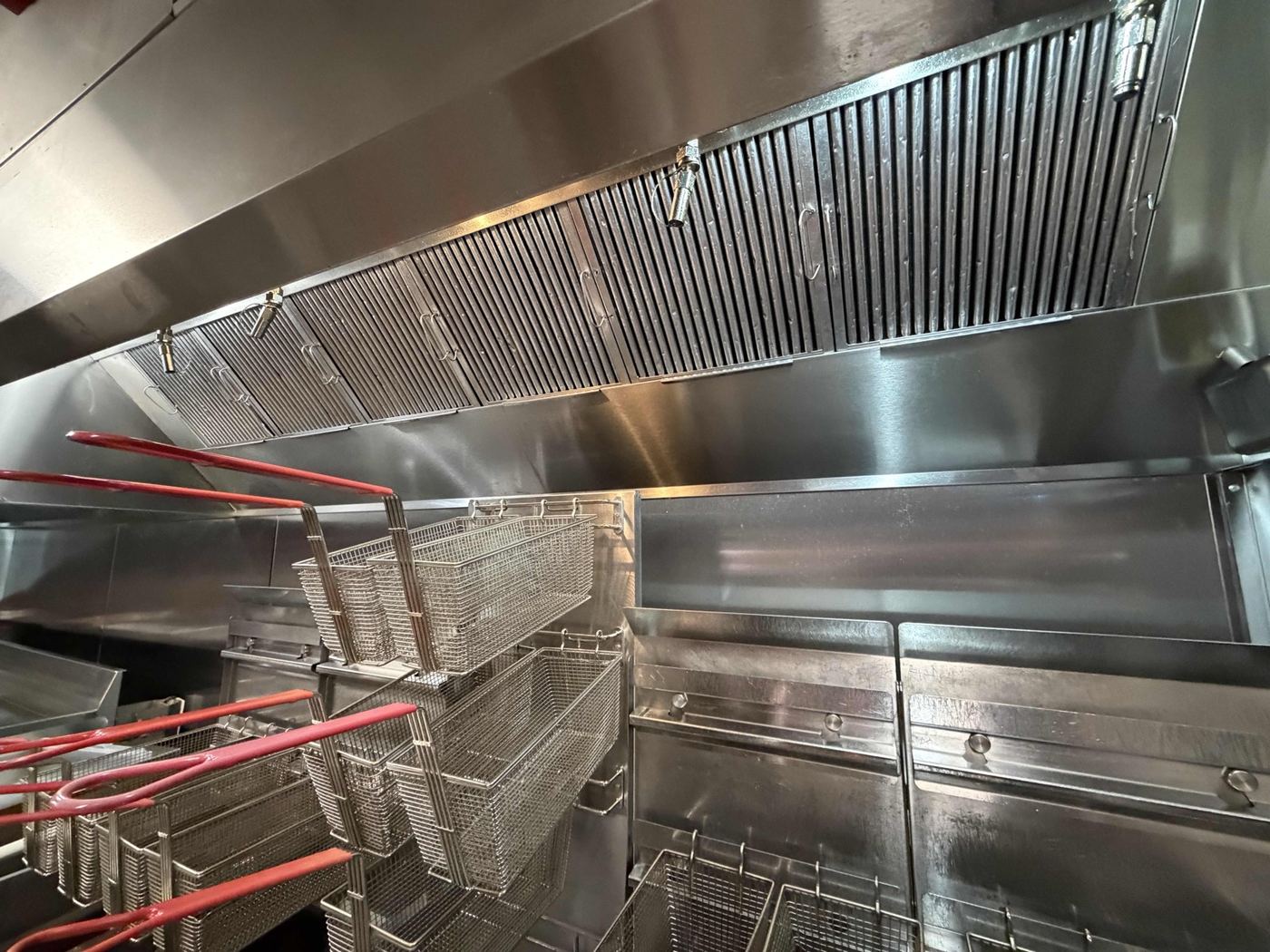
Two things decide what happens at the back door of a Florida kitchen: what the equipment is certified for, and where the food was bought. Both trace back to the Food Code that the state inspectors use. Commercial Kitchen 101 explains the rules and passes your request to local companies, and the state office has the final word on any single item.
How DBPR looks at your equipment
DBPR enforces the 2017 FDA Food Code in Florida restaurants. Rule 61C-4.010 brings in Chapter 4 of that code, the part that deals with equipment, utensils and linens.
The Food Code gives a shortcut. Equipment that an ANSI-accredited program has certified or classified for sanitation is deemed to meet the equipment sections. A listing mark from a certifier such as NSF is how that shows up on the machine.
The FDA publishes the NSF/ANSI standards that apply to food equipment:
| Standard | Covers |
|---|---|
| NSF/ANSI 2 | Food equipment in general |
| NSF/ANSI 3 | Warewashing (dishwashers) |
| NSF/ANSI 4 | Cooking and hot-holding equipment |
| NSF/ANSI 5 | Water heaters |
| NSF/ANSI 7 | Refrigerators and freezers |
| NSF/ANSI 8 | Powered food preparation equipment |
| NSF/ANSI 12 | Ice making equipment |
| NSF/ANSI 13 | Refuse processors |
| NSF/ANSI 18 | Manual food and beverage dispensing |
| NSF/ANSI 51 | Materials used in food equipment |
For a new kitchen, the DBPR plan packet asks for a specification sheet whenever an item is "not customary for food service operations". The packet also sets out what the plan has to show:
- Hand washing: a three-compartment sink with drainboards or equivalent shelving. Machine washing: a commercial dishwasher with gauges.
- A detergent or sanitizer indicator on any dishwasher installed after January 1, 1998, signaling by sight or sound when more is needed.
- Finishes that are smooth, easy to clean and non-absorbent, with coved baseboards.
- Refrigeration holding 41 degrees Fahrenheit or colder, with thermometers, plus a probe thermometer.
Anything that sits under the hood changes the hood and the suppression system too. Before a fryer or charbroiler is bought, a licensed hood company and a licensed suppression company can say whether the existing setup covers it. Read about hoods and exhaust and fire suppression first.
Utility rebates: what was found
ENERGY STAR certifies commercial food service equipment: refrigerators and freezers, ice makers, dishwashers, ovens, griddles, fryers, steam cookers, hot food holding cabinets, coffee brewers and electric cooktops. Its Rebate Finder looks up utility rebates by zip code.
A read of several Florida utility business pages in November 2026 turned up little for kitchens. Florida Power & Light listed HVAC and lighting rebates and a custom incentive. Tampa Electric listed variable frequency drives, water heating, lighting and custom efficiency. Neither page showed a kitchen equipment rebate.
Orlando Utilities Commission showed rebates for air conditioners, insulation, duct repair and battery storage, though its page hides more behind a "Load All" button. The Duke Energy Florida and JEA business pages could not be read at all, so nothing is claimed about them.
No kitchen equipment rebate from a Florida utility has been confirmed. The sensible order is to run the Rebate Finder, then ask the utility's business program office before the purchase order goes out.
A local company can take it from here. One form, free for restaurants.
Get connectedWhere food may come from
Section 3-201.11 of the Food Code requires food from sources that comply with law. A private home is not one of them, so food cooked at home cannot be used or offered in the restaurant. Packaged food has to carry the labels the law calls for.
The Food Code sets these receiving conditions:
- Cold food needing time and temperature control arrives at 41 degrees Fahrenheit or below. Raw shell eggs may arrive in air at 45 degrees or less.
- Hot food arrives at 135 degrees or above.
- Frozen food arrives frozen.
- Nothing shows signs of temperature abuse.
Molluscan shellfish must come from sources listed under the National Shellfish Sanitation Program, and the shellstock tags stay on file for 90 days.
Florida's Department of Agriculture and Consumer Services issues food permits and renews them yearly, unless an exemption applies. A restaurant licensed by DBPR falls under DBPR instead. A distributor's status depends on its business, so the distributor can be asked to show a permit or an exemption.
Questions for a distributor
- Does the business hold a Florida permit or an exemption, and can it show the paperwork?
- Do the trucks keep cold and frozen food at the receiving temperatures above?
- Do shellfish come with tags, and are copies handed over?
- Is the packaged food labeled the way the law requires?
- Which delivery windows are offered, and who signs for the order?
- What happens when a case arrives too warm?
Send the form with a Florida ZIP code and say whether you need equipment, a food supplier or both, and it goes to the number of local companies you choose (one to five).
Questions
Must restaurant equipment carry an NSF mark in Florida?
The Food Code accepts equipment certified by an ANSI-accredited program, and NSF is one of those. Plan reviewers can request spec sheets for unusual items, so DBPR is the office to ask about a particular machine.
Can a Florida restaurant get a utility rebate on kitchen equipment?
None turned up on the FPL, OUC or Tampa Electric business pages that were read. The ENERGY STAR Rebate Finder and a call to your utility are the next steps to try.
Is food from a home kitchen allowed in a restaurant?
It is not. Under the Food Code, food prepared in a private home may not be used or offered in a food establishment.
How cold must a delivery of refrigerated food be?
Time and temperature control food should arrive at 41 degrees Fahrenheit or below. Raw shell eggs are the exception, since they may arrive in air at 45 degrees or less.
Sources
- FDA 2017 Food Code
- FDA 2017 Food Code Supplement
- FDA, American National Standards for food equipment
- Rule 61C-4.010, Florida Administrative Code
- DBPR plan review packet (HR-7030)
- Florida Statutes 500.12, food permits
- ENERGY STAR, commercial food service equipment
- ENERGY STAR Rebate Finder
- FPL business programs
- OUC business rebates
- Tampa Electric business