Home › Georgia › Georgia restaurant hood and exhaust codes
Georgia restaurant hood and exhaust codes: IMC, NFPA 96
- Pick what you need and give your kitchen's ZIP code.
- Each service goes to the number of local companies you choose, from one to five. We check licenses where the law requires one and email you their names.
- You talk with them and decide. You hire and pay the company directly.
Facts checked 2026-11-15.
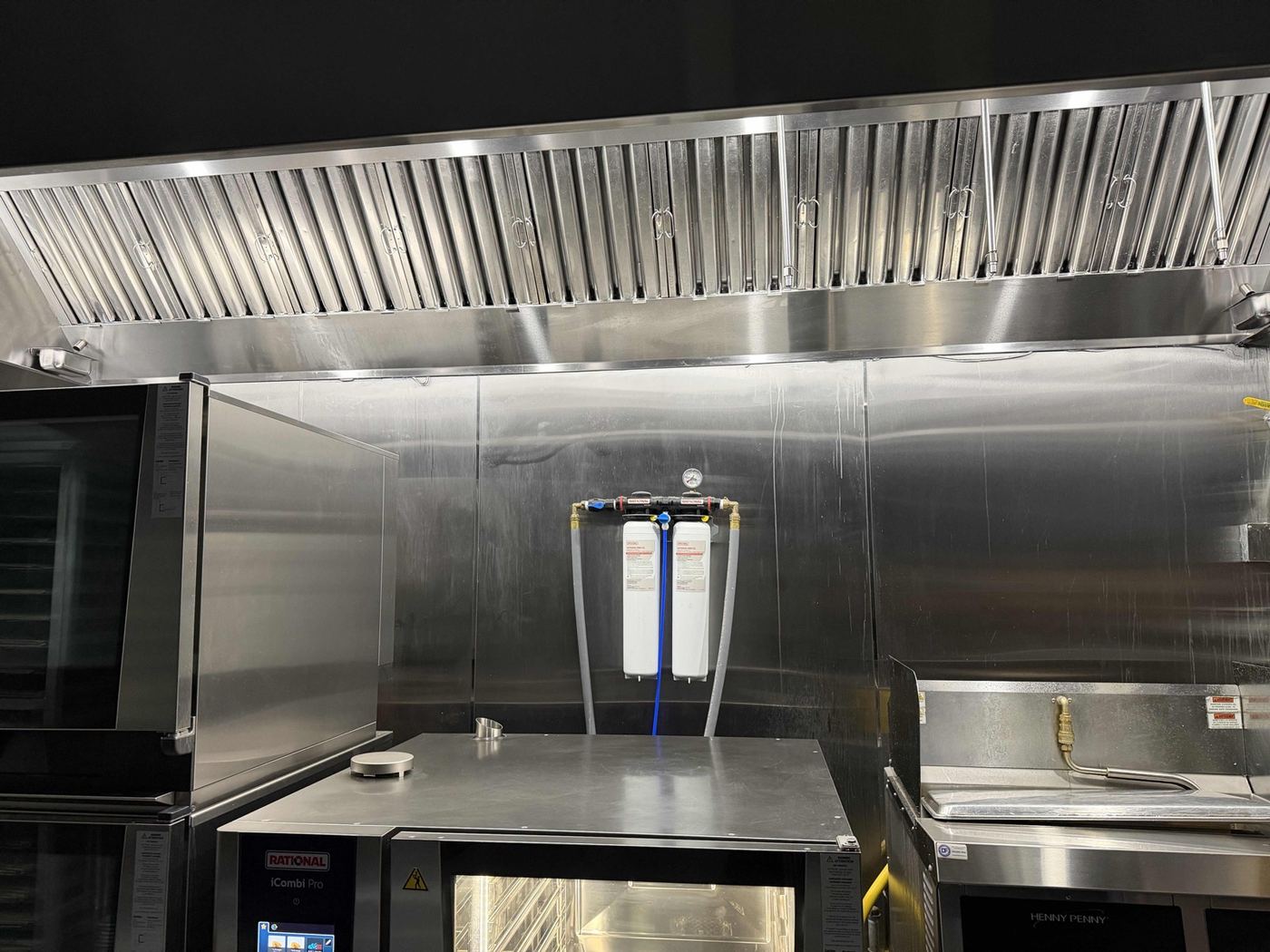
A restaurant hood in Georgia has three sets of rules to satisfy together: the state mechanical code, the state fire rules and the health rules. City and county permit offices then add checklists of their own.
Mechanical code
The Department of Community Affairs (DCA) sets the state minimum codes. A DCA memo dated December 1, 2025 lists the 2024 International Mechanical Code (IMC), with Georgia amendments, as effective January 1, 2026. Local governments use it to review and inspect mechanical work.
Georgia's IMC amendments send kitchen exhaust to the fire rules:
- Sections 506.1 and 507.1 have Type I hood ducts, exhaust equipment and hoods designed, built and installed to NFPA 101 and NFPA 96 as the Insurance and Safety Fire Commissioner adopts and amends them.
- Section 507.2.11 leaves fire suppression for commercial cooking equipment to those same two standards.
- Section 301.19 reads any IMC reference to the International Fire Code or an NFPA standard as the latest edition the Commissioner has adopted.
- Section 505.9 pulls domestic cooking systems used commercially under NFPA 101 and NFPA 96. A home-style range in a restaurant follows commercial rules.
Fire rules
Rule 120-3-3 adopts the 2024 edition of NFPA 96, effective May 27, 2025. Georgia's fire code changes add lines that bear on a hood:
- 607.1 to 607.3: hoods meet NFPA 96, sit at or above all appliances producing grease-laden vapors, and the whole ventilation system is installed, operated and maintained to that standard.
- 904.2.2: each required commercial kitchen exhaust hood and duct system has an approved automatic fire-extinguishing system.
- NFPA 96, section 10.2.6: competent personnel who meet the licensing and permit rules of Rule 120-3-23 install that system.
- NFPA 96, section 1.1.4: the standard covers all commercial cooking equipment used in commercial cooking operations.
For licenses, tags and records on the extinguishing system, see the suppression guide. Upkeep is in the hood cleaning guide.
A local company can take it from here. One form, free for restaurants.
Get connectedHealth rules
Under DPH Rule 511-6-1-.05, an exhaust hood system with its hoods, fans, guards and ducting must keep grease or condensation from dripping onto food, equipment or utensils. Grease filters or extracting equipment come out easily for cleaning. The system needs enough number and capacity so grease or condensation does not collect on walls and ceilings.
Rule .07 adds two points. Exhaust that vents outdoors may not create a public health hazard or nuisance, and ducts are cleaned and filters changed so they do not contaminate anything.
A plan review packet for the county health office includes mechanical plans and the type and model of each fixed unit, and the hood belongs on that list.
Permit office checklists
Each city and county writes its own.
Atlanta takes applications through its online permitting portal, where mechanical plans are a required upload. The city wants the physical state-issued contractor license card and will not take the Secretary of State's printout for electronic filings. New applications from February 1, 2026 onward use the 2024 IMC. The Office of Buildings answers at 404-330-6150.
In Gwinnett County, Planning and Development handles commercial construction, fire suppression system permits and mechanical, electrical and plumbing trade permits through the ZIP Portal. The permit goes to the contractor of record after plan review, fees and contractor details. Inspection requests need the permit case number.
The building department can say which contractor license hood and duct work calls for.
Questions to settle before buying a hood
- Is a Type I hood on the plan, and does the local office agree?
- Which route will the duct take, and does the fire marshal want access panels in certain places?
- How does makeup air get in?
- Does the package include a fire-extinguishing system, and is its installer licensed under Rule 120-3-23?
- Which NFPA 96 edition will the inspector apply at final?
On that last point, Georgia changed editions in 2025 and published proposed changes later that year, so get the current text from your fire marshal.
Hood rebates
Georgia Power's rebates page lists $500 per horsepower for high-efficiency ventilation hoods with sensor control. Each program's rules set who qualifies, so read them before buying.
Tell the form about the new hood or exhaust upgrade, and it reaches one licensed contractor near your Georgia kitchen.
Questions
Which building code applies to a Georgia restaurant hood?
Georgia's amended 2024 International Mechanical Code, effective January 1, 2026. Its kitchen exhaust sections refer to NFPA 96 and NFPA 101 as the Safety Fire Commissioner adopts them.
Is fire suppression required under a Georgia kitchen hood?
Yes. The state's fire code changes require an approved automatic fire-extinguishing system on each required commercial kitchen exhaust hood and duct system.
What NFPA 96 edition is in force in Georgia?
The 2024 edition, effective May 27, 2025. It replaced the 2017 edition.
Can a home range go into a commercial kitchen in Georgia?
Georgia's mechanical amendments extend NFPA 101 and NFPA 96 to domestic cooking systems used commercially, so the commercial hood rules apply to them.
Sources
- DCA 2026 code changes memo
- DCA 2026 IMC amendment packet
- Georgia Rule 120-3-3, State Minimum Fire Safety Standards (OCI PDF)
- Georgia Rule 120-3-3-.04, adopted standards and history
- Georgia Rule 511-6-1-.05, exhaust hoods
- Georgia Rule 511-6-1-.07, ventilation
- City of Atlanta construction codes
- City of Atlanta online permitting
- Gwinnett County building services
- Georgia Power commercial rebates
- OCI proposed rule notice, Nov 6, 2025