Home › Georgia › Georgia restaurant opening checklist
Georgia restaurant opening checklist: permits, plans
- Pick what you need and give your kitchen's ZIP code.
- Each service goes to the number of local companies you choose, from one to five. We check licenses where the law requires one and email you their names.
- You talk with them and decide. You hire and pay the company directly.
Facts checked 2026-11-15.
Four offices sign off on a new Georgia restaurant: health, building, fire and, in many places, the sewer utility. Each has its own forms, plan sets and inspections, and local practice varies, so confirm every step with your own city or county. The sections here follow the order the work usually runs in.
The health permit and plan review
The Department of Public Health (DPH) writes Georgia's food service rules in Chapter 511-6-1, and the county health office applies them. Fulton County's office is the Fulton County Board of Health. Gwinnett, Newton and Rockdale counties share GNR Health.
Under Rule 511-6-1-.02, a food service that is newly built, extensively remodeled or converted from another use sends plans and specifications to the county health authority at least 14 business days ahead of construction. The reviewer measures them against DPH's manual on food service design, installation and construction.
A plan set shows:
- the menu
- the floor plan and equipment layout
- mechanical plans
- construction materials and the finish schedule
- type and model of each fixed unit
- expected daily service volume
The health permit follows a complete application, the fee, approved plans and a preoperational inspection confirming the work matches what was approved.
A Fulton County Board of Health brochure calls this permit "the first of many steps." Business licensing, a liquor license for alcohol sales and zoning approval are handled apart from it. The brochure adds that permits do not move between people or locations, so someone who buys an existing restaurant applies fresh. A new building, or a space that was never a food service, gets the full new-establishment review. A change of owner or a major remodel gets a different review type.
Building permits
State minimum building codes come from the Department of Community Affairs. Since January 1, 2026, it requires the 2024 International Mechanical Code with Georgia amendments, alongside the 2024 building and plumbing codes. Cities and counties apply these and issue the permits.
Atlanta handles applications through its online permitting portal, with mechanical and plumbing plans as required uploads. The upload list also includes Fulton County health approval, a State Fire Marshal letter of approval and a sewer capacity certification. Every file must be a PDF, because cloud drive links are refused. The city wants the physical state contractor license card, not merely a Secretary of State printout.
Gwinnett County's Planning and Development department covers commercial construction, tenant certificates of occupancy, fire suppression systems and trade permits for mechanical, electrical and plumbing work. The ZIP Portal takes both applications and inspection requests.
A local company can take it from here. One form, free for restaurants.
Get connectedHood and fire protection
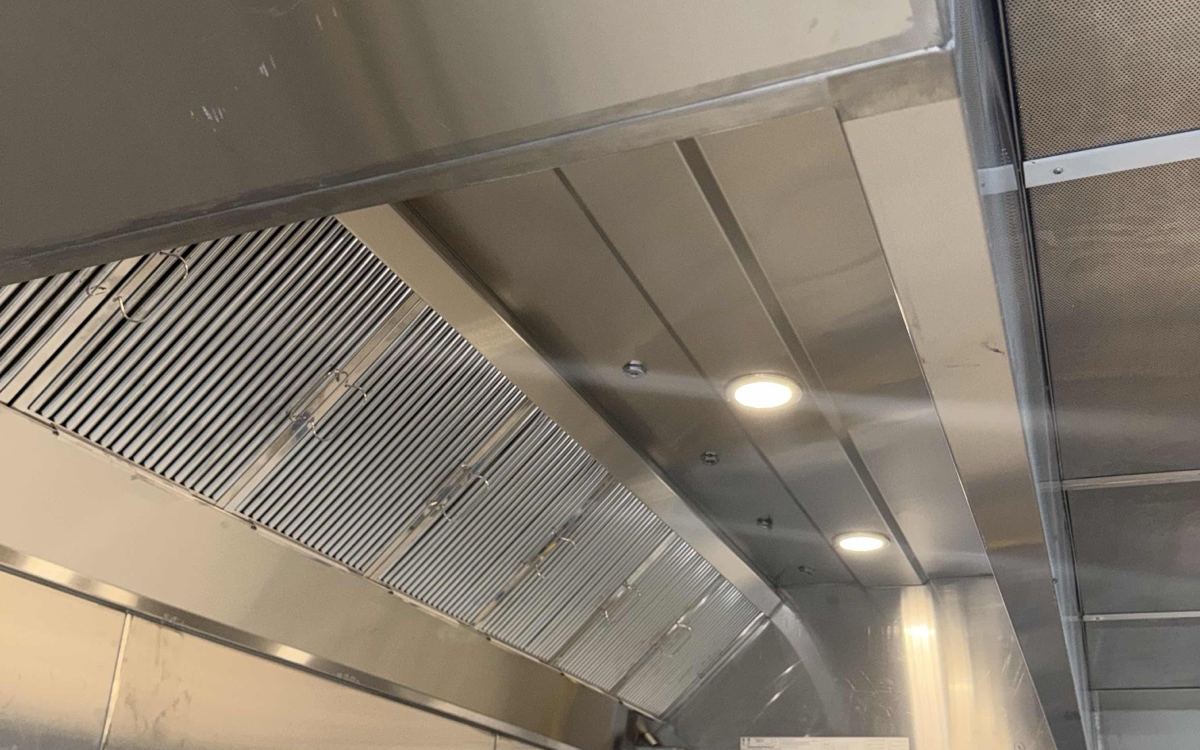
Georgia's fire code changes require an automatic fire-extinguishing system on a commercial kitchen hood. A firm licensed under Rule 120-3-23 installs it with a permitted technician. The kitchen fire suppression guide explains licenses, tags and records.
For certain occupancies, the Safety Fire Commissioner's office reviews plans, and its page directs filers to its portal. Other restaurants may deal with the local fire marshal instead, who can tell you where yours goes. In Gwinnett County, the Fire Marshal inspects new construction and high-risk occupancies, and fire plans and operational permits are filed in the ZIP Portal.
For hoods and ducts, Georgia has adopted the 2024 edition of NFPA 96 as of May 2025, and more changes have been proposed, so look up the current state rule. The hoods and exhaust guide has the detail.
The grease trap
A kitchen that needs a trap should ask its sewer utility what the utility wants before the plumbing permit. Atlanta's Department of Watershed Management, for one, asks for floor plans showing kitchen equipment tied into the sanitary line, plus trap specifications. The grease trap guide covers the state rules.
Equipment
DPH plan review lists the type and model of fixed equipment. Rule 511-6-1-.05 calls for commercial-grade equipment, and a unit certified by an ANSI-accredited program under a recognized American National Standard is deemed to meet the design standards when used as intended. The equipment guide goes further.
Inspections ahead of opening day
Several inspections come first. The health authority conducts construction inspections of a new or extensively remodeled place, then a preoperational inspection before issuing the permit. The building office inspects the permitted work. Atlanta counts fire protection among its inspection types and accepts requests through its portal, by email, by phone or by text. Requests in by 3:00 p.m. are inspected within two business days, and stamped plans must stay on site.
Who to call first
- Ask the county health office for its plan review packet.
- Pick up the commercial submittal list at the city or county permit office.
- Ask the fire marshal where hood and suppression plans are sent.
- Ask the sewer utility whether a grease trap is needed and what it wants to see.
- Check each company's license number with the agency that issued it.
The form takes a Georgia build-out request and forwards it to the number of local companies you choose (one to five).
Questions
What is the deadline for sending plans to the health office?
Plans go in at least 14 business days before construction begins, under Rule 511-6-1-.02.
Is a health inspection needed before a new Georgia restaurant opens?
Yes. The authority issues the permit only after approving plans and carrying out a preoperational inspection.
Does the food service permit cover everything I need to open?
No. A Fulton County Board of Health brochure calls it the first of many steps, and business licenses, zoning and building permits come separately.
Does a food service permit carry over to a new owner?
No. The same brochure says permits do not transfer between people or locations.
Sources
- DPH food service page
- Georgia Rule 511-6-1-.02, plan review and permits
- Georgia Rule 511-6-1-.05, equipment and ventilation
- Georgia Rule 511-6-1-.10, inspections
- Fulton County Board of Health, Starting a Food Service Business
- GNR Health restaurant regulations and forms
- DCA 2026 code changes memo
- City of Atlanta online permitting
- City of Atlanta inspections
- Gwinnett County building services
- Gwinnett Community Risk Reduction
- OCI submit a safety fire plan
- Georgia Rule 120-3-3, State Minimum Fire Safety Standards (OCI PDF)
- City of Atlanta Grease Management Program